Castello Svevo, Bari

Castello Svevo, Trani
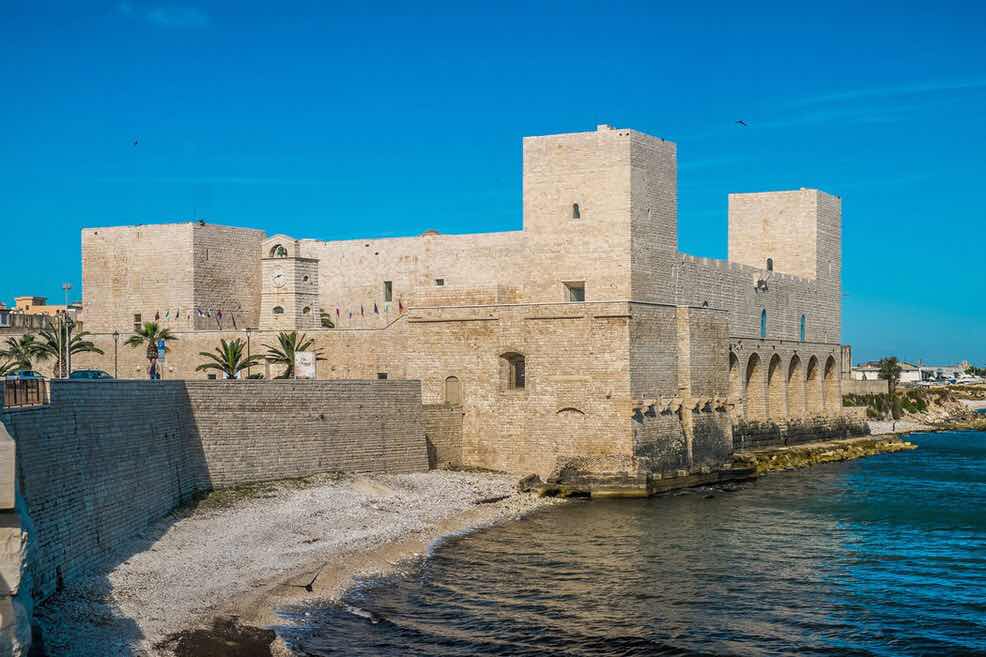
Rumor has it that Emperor Federico II met St. Francis of Assisi at his castle in Bari in 1221. The emperor had a courtesan sent to Francis's room and watched through a peephole to see what would happen. When Francis sent the woman away, Frederick was impressed with his principles and they became friends.
Who would have thought that I.M. Pei May have gotten some inspiration from the Castello Svevo in Trani in the design of the National Gallery of Art in Washington, D.C.? There is a striking resemblance between the two buildings, even though they are 600 years apart.
National Gallery of Art, I.M.Pei

But there’s more to these seaside cities on Italy’s Adriatic Coast than castles. For example, last night we took a walk around the narrow, winding streets of Bari’s old section (Vecchio Bari), and found the streets full of people at restaurants, gelaterias, and other small shops. But we were most delighted to see house owners in these narrow streets sitting by their open doors watching the parade of people walking by. Often there were people inside having dinner in their dining rooms that opened right on the street, or in other houses, it was their living room that was open to the street; one kind of felt like a voyeur, even if you were simply walking by and minding our own business.
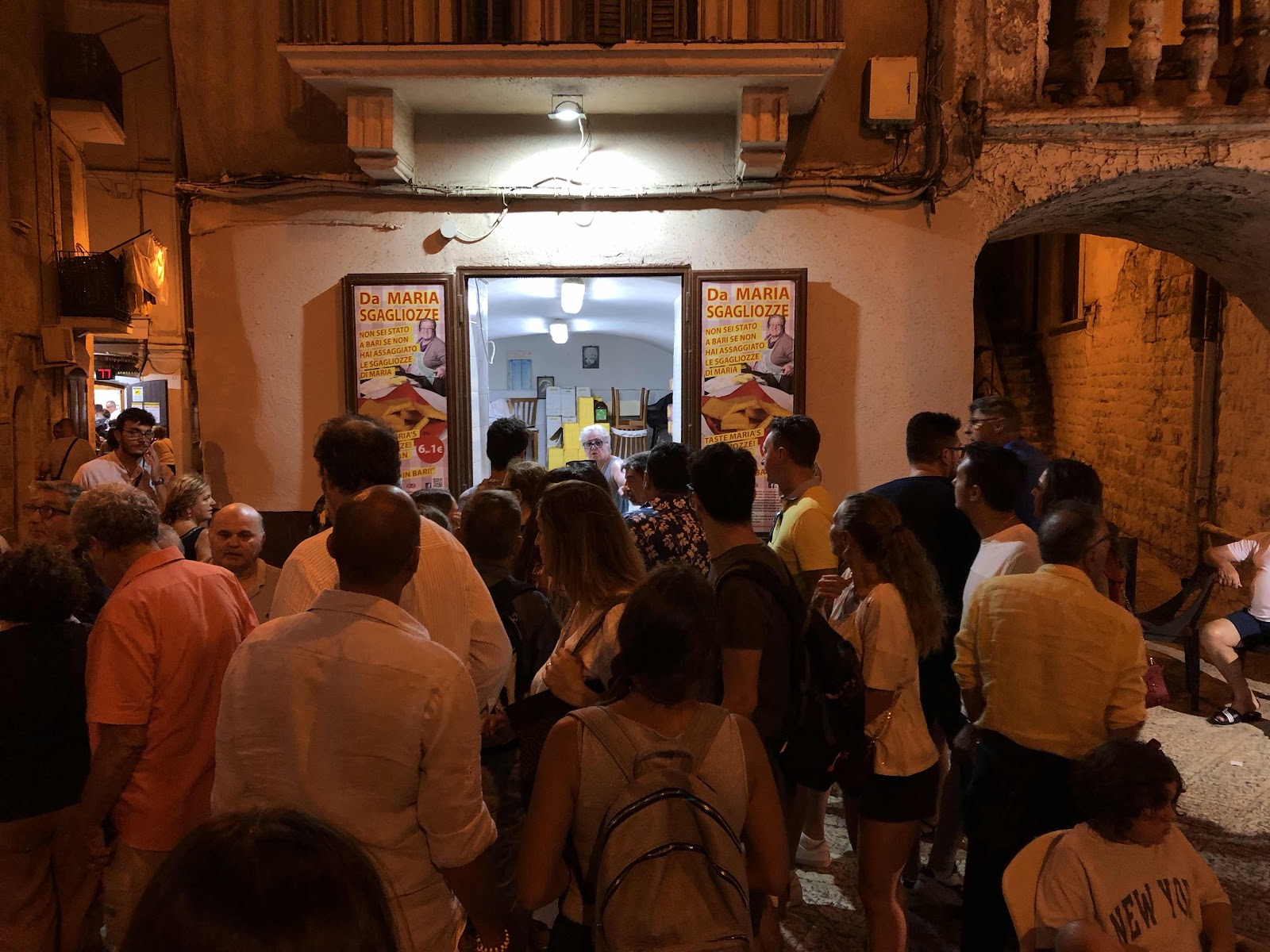
This hole in the wall place, Da Maria Sgagliozze, attracted a crowd of people waiting their turn to try Maria’s sgagliozze; it’s
a speciality of Bari, especially popular during festivals (hey, Ferragosto is being celebrated in Italy right now!). Sgagliozze is basically fried polenta; we didn’t try it here, but it’s kind of similar to panella, which is fried chick pea squares, a speciality of Sicily.
Maria’s Sgagliozze shop in old town, Bari

But we had a terrific dinner at Ristorante Giampaolo, not far from the Castello Svevo in Bari. We were too satisfied to even contemplate dessert, but perhaps because we were the only foreigners speaking Italian, they gave us a complimentary dessert...pastry filled with creme patisserie (like a custard cream). They were small...a few bites and that was it. We didn’t know what it was called, so we asked. The answer...sporcamuso. I knew that “sporca” means dirty, a mess...and that “muso” means snout or muzzle. Sporcamuso is the local dialect word for this dolce because if you’re not careful, you’ll have some of the custard left around your mouth.
Ciao,
David

Hey David,
ReplyDeleteGreat article and pics-thanks!
What a coincidence...I'm making polenta for dinner..con funghi, pimiento & cipolla.
Cheers,
Zeny