Monday, September 9, 2019

Impressions of Bougival

Bougival is a small town about 10 miles west of Paris, nestled along the Seine River. It’s where many Impressionist painters lived and worked, including Claude Monet, Alfred Sisley, Berthe Morisot, and Auguste Renoir. They painted  country scenes along the Seine, and along some paths of the Seine, you can see several  historical placards, known as the "Impressionists Walk," at locations from which the Impressionist painters painted  scenes of Bougival. It’s also where our friends, Marc and Virginie live...in a new house in the International Bauhaus style, with ultra modern appliances and features, which includes a game room (with pool table and an American pinball machine from the 1950s), a media/movie room, and a sound-proof music room for their talented musician son, Alex. The weekend Market has everything you can imagine, and Marc’s wine cellar is a wine lover’s paradise (who else has a 1921 Sauterne in their cellar?). Let’s see a few of the places we visited and things we did during the weekend visit.

During our Sunday stroll along the Seine, we ran across a Pétanque court and played a few games. Both teams were victors. 


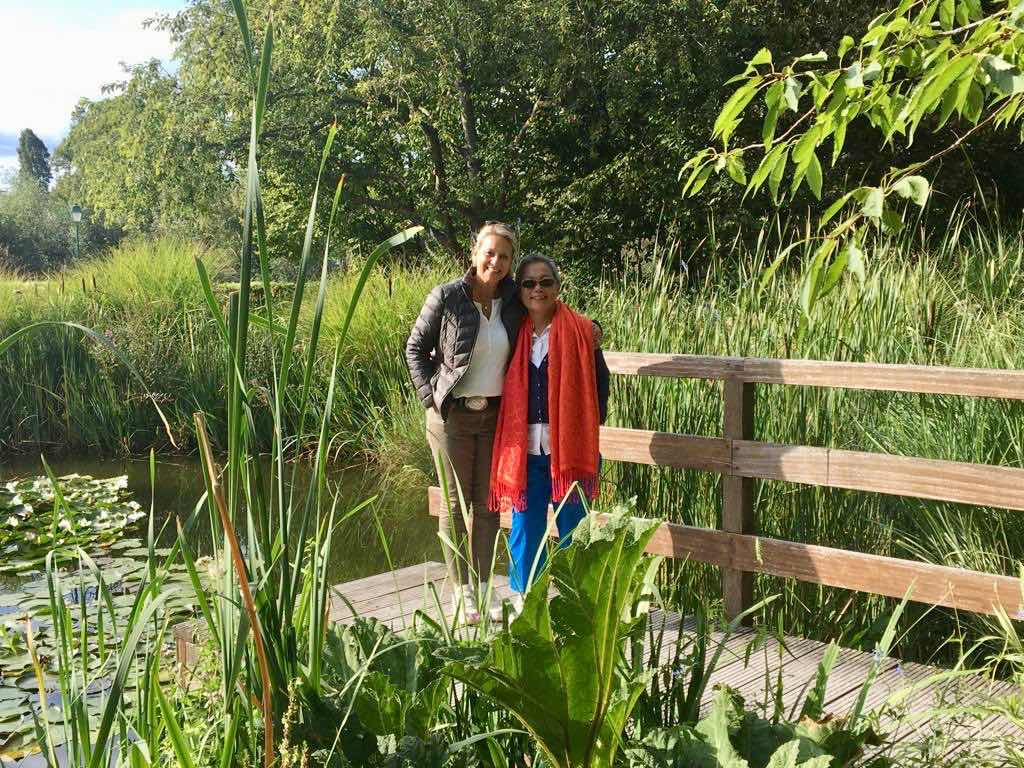
The two Virginias 

Au bord de la Seine


Mansion of the Louis XIV property manager. Sphinxes added later

At the Early Gothic church at Croissy-sur-Seine 


Shopping at the market. Cepes are in season 

Church at Croissy-sur-Seine 

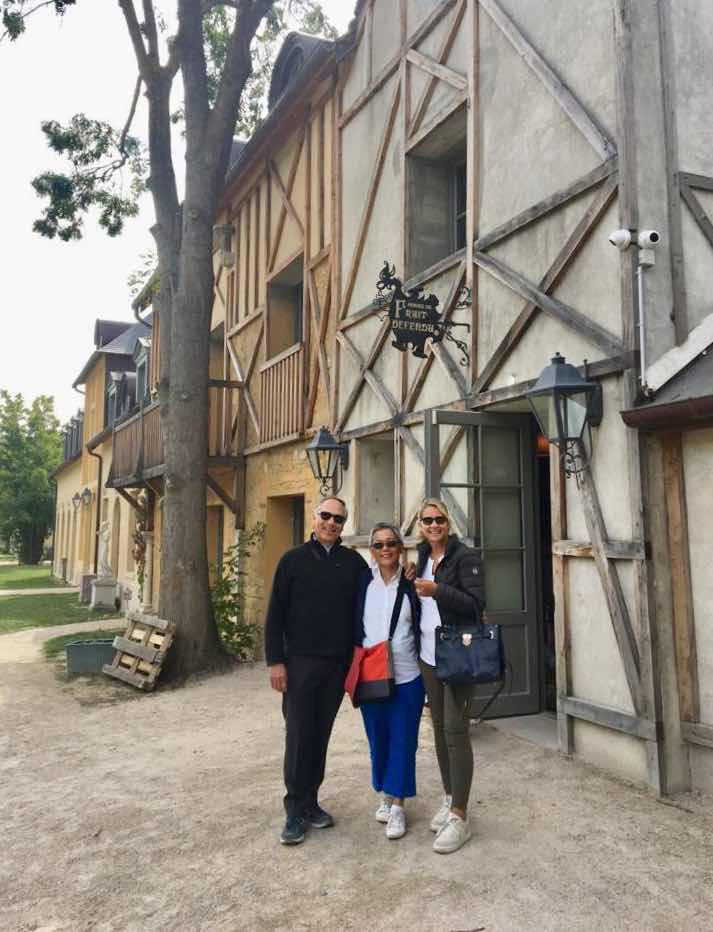
Fruit Defendu...along the Seine...where we had lunch


We’re in France, where food and wine is more than an afterthought...bordering on obsession. Who is to argue with that? Especially when you have a Corton Charlemagne with your exquisitely grilled salmon? Or perhaps the Chiroubles Beaujolais with your Dos de canette (Duck)? And après dinner, a game of pool and some pinball action?
An excellent dinner with our generous hosts, Marc & Virginie

Marc serving a special Burgundy wine


One of the finest white Burgundy wines, Corton Charlemagne

Pool...in the game room


Aperto. Spritz to sharpen our pool game


It will be difficult to leave this beautiful home, hosts, and village. But we have Paris in our sights where we have plans to visit more friends and to see the Berthe Morisot exhibit at the Gare d’Orsay Museum and the new Louis Vuitton Museum. I hope we also have time to visit the Orangerie to see Monet’s waterlilies...always one of my favorite places to visit in Paris.

Wednesday, September 4, 2019

Matera, One of the Oldest Continuously Occupied Cities in the World

Matera has a timeless quality about it...it’s literally and figuratively as old as the hills. From Neolithic settlements until the present, this area has lasted for the past 10,000 years. It’s pretty hard to beat the durability of rock, in this case, the tufo of Matera, as a building material. And as they tell you here, it is a kind of negative construction; the houses (caves) are dug out of the rock. We have the good fortune to be staying in a sasso (literally meaning stone) cave dwelling in the Caveoso area of Matera. It’s very cool, even during these hot late August/early September days. It’s light years away from the original sasso (Sassi is the plural); we have modern plumbing and electricity. This is our sasso dwelling:


And this is a sasso dwelling from about 1950 that housed a family of nine...plus an animal or two.


2is

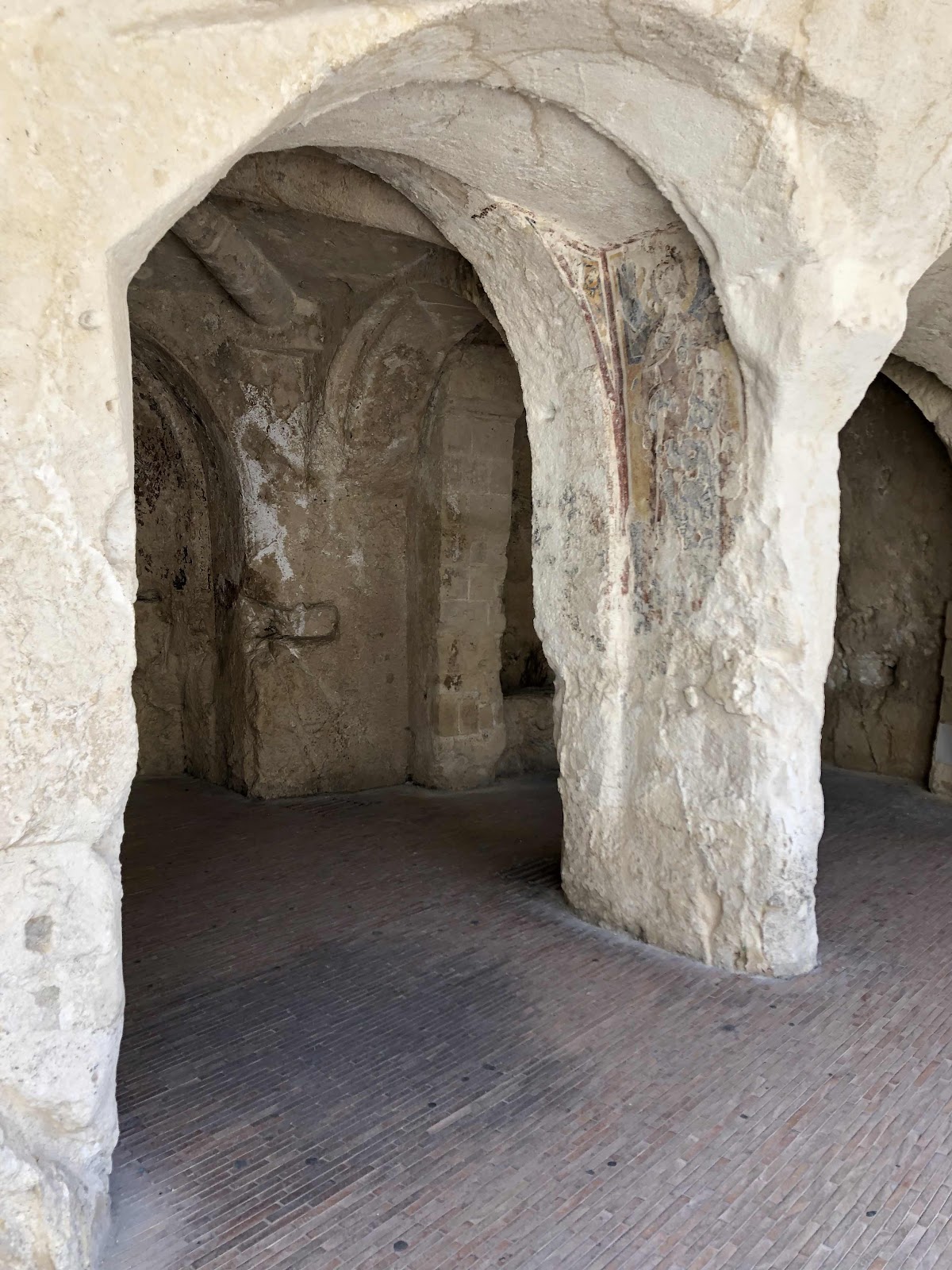
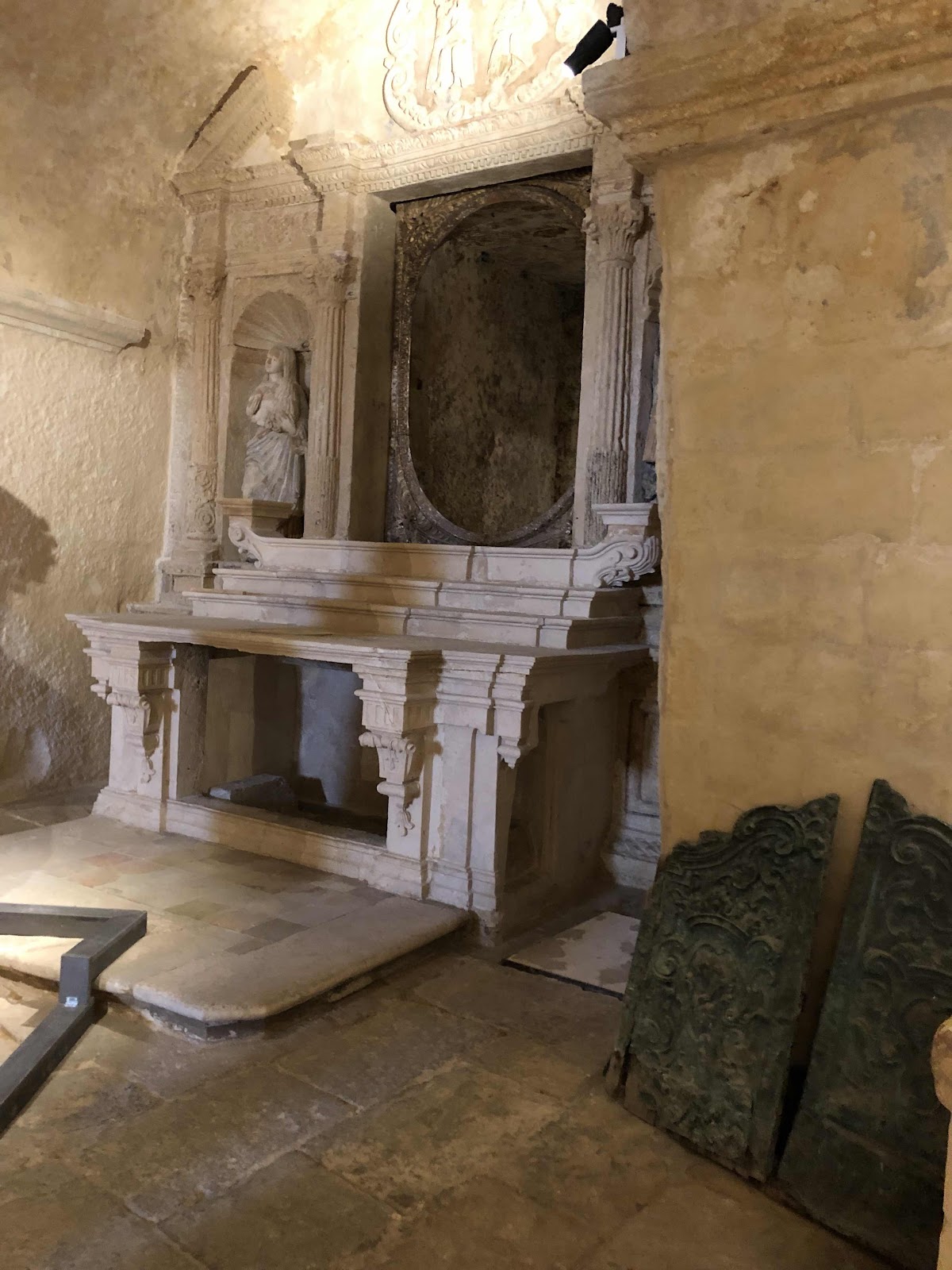
Matera is built on the sides and top of a few ravines/canyons, so it can be difficult to go from one part of the town to another. Everything is made of stone, the houses, the roads, the sidewalks...everything.  Early settlers transitioned from hunter/gatherers to an agriculture economy, and as other settlements in Lucano (Puglia and Basilicata), were later Greek, Norman, Saracen, Roman, etc. areas, and became Christianized, as can be seen by the “rupestri” cave churches cut into the stone. Some of these early churches still have some fresco paintings, and were used for church services until around 1278 or so. 
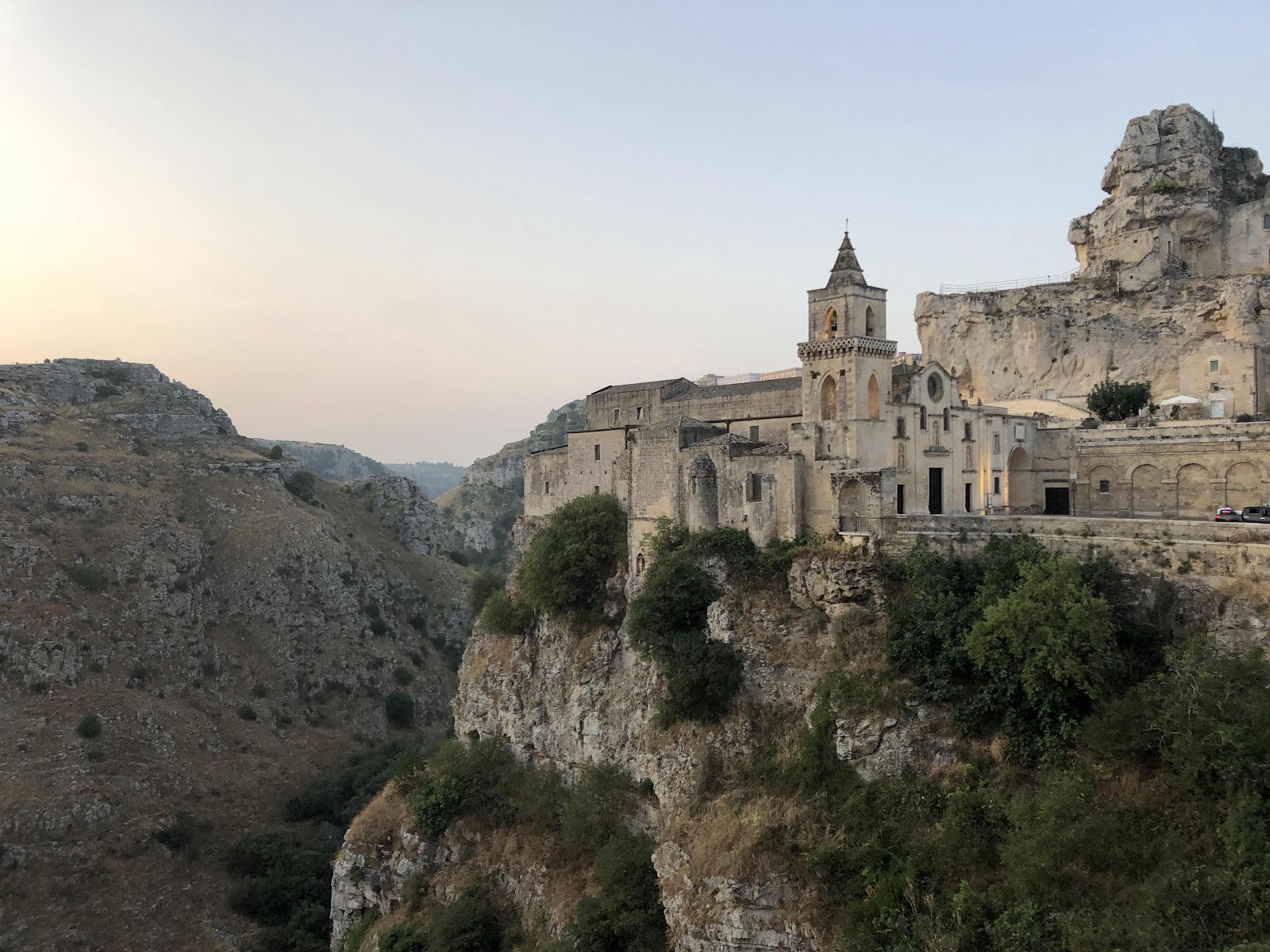
Here are a few examples of “rupestri” cave churches


Matera has an incredible network of underground water channels and cisterns called the Palombaro Lungo. It’s a huge water reserve fed by springs and rainwater...an engineering feat...centuries old that gave Matera the special World Heritage Site status. This gigantic cistern, carved from rock is about 50 feet deep, and was often filled to the top. 


Matera is the kind of city where you wander around the narrow streets...up...up...up...and then you reach a plateau of the newer part of the city, than you wend your way down back to the sassi. It doesn’t matter if you are lost for a while, because eventually you see a landmark church or a main street to get your bearings again. A few more photos of Matera, then it’s addio Matera, on our way to Paris via Bari (with a bit of extra drama involving a strike by Alitalia, disrupting our Bari to Rome flight. 


Ciao,
David & Virginia

Monday, September 2, 2019

The Apennine Mountain range...this far south?

Yes, the Apennine mountain range does indeed go the entire length of Italy. Potenza, one of the main cities of Basilicata, at close to 1,000 meters, is the highest regional capital in Italy. But unfortunately, that doesn’t qualify it for being an interesting city to visit. There’s basically one street to visit...ab9ut 12 blocks long or so, where you will find the Cathedral, the F. Stabile Theater, a few more churches, and the National Archeological Museum. And since it is not on the usual tourist itinerary, there are few restaurants...with virtually of the, closed on Sunday (yes, one of the days we were there). But, we did enjoy what was there. 

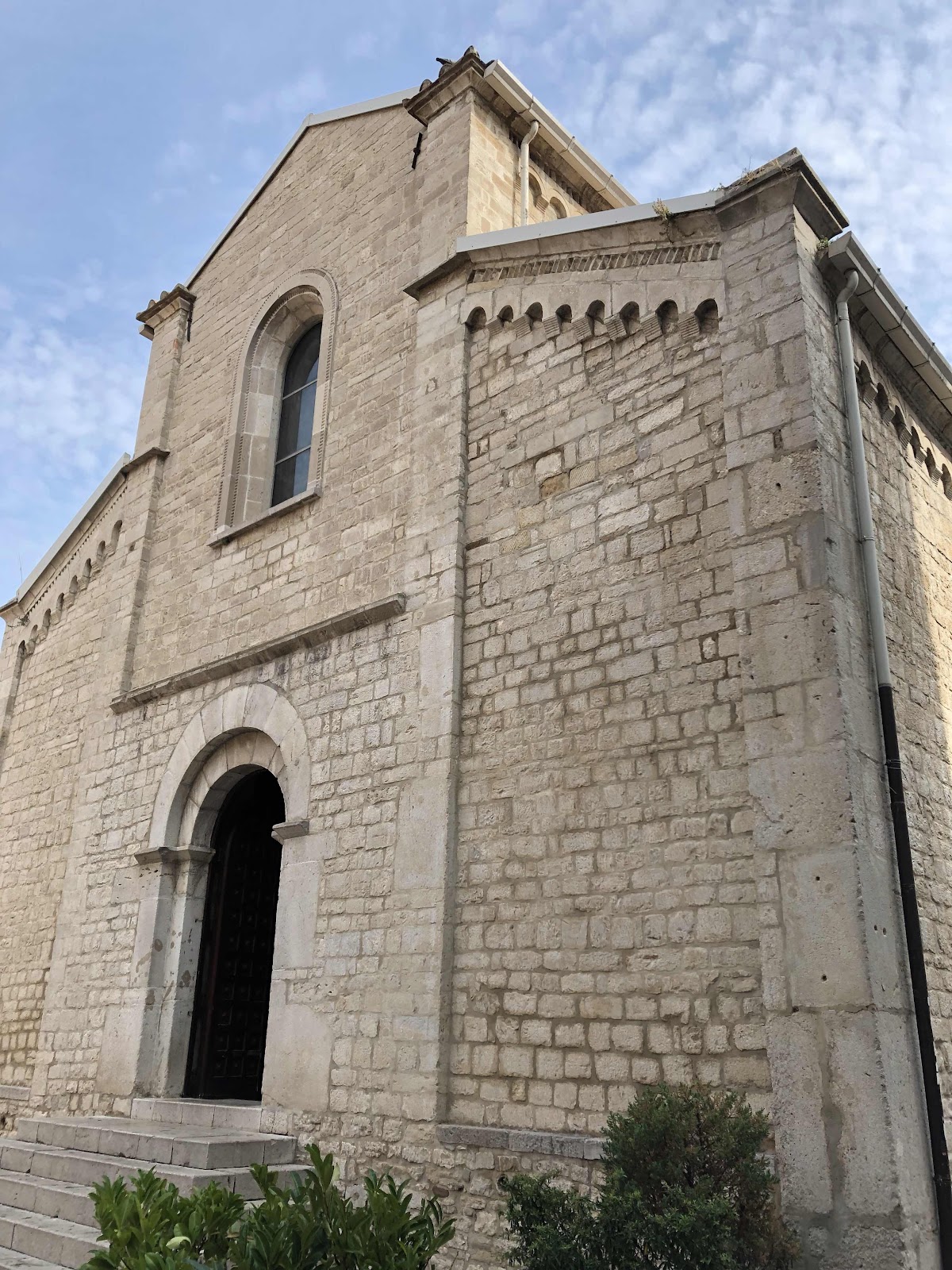
I do have a soft spot for Romanesque churches; I find the simplicity of design and minimal adornments appealing. You’ve got your nave, your altar, simple arches, and thick stone walls. The Chiesa San Michele Arcangelo dates from 1178, and there are floor mosaics from an earlier church from the 5th century.

Chiesa San Michele Arcangelo,  Potenza


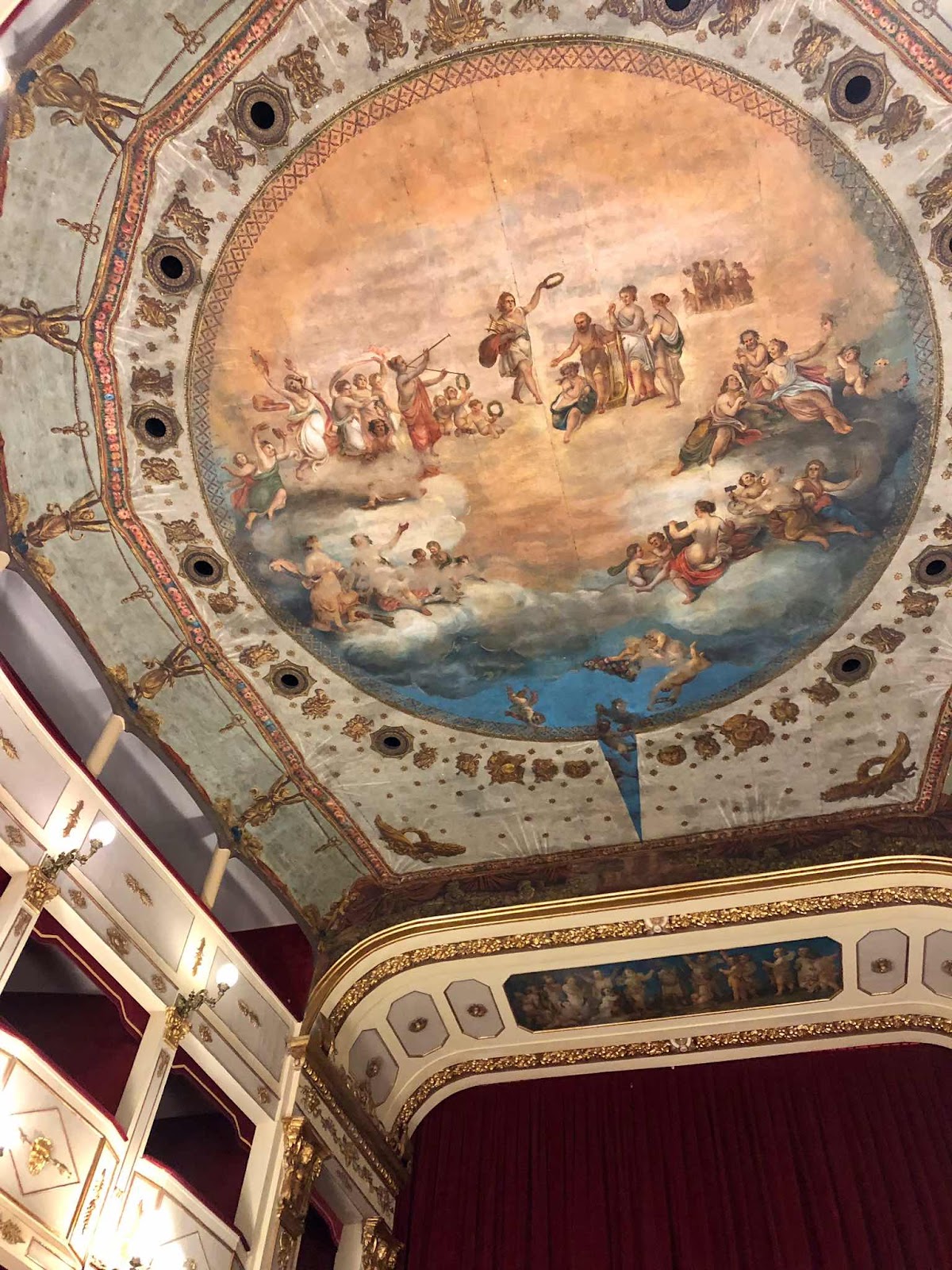
And in the Piazza San Pagano, you find the F. Stabile Teatro...built around 1860; it’s the only opera lirica Theater in Basilicata. It’s very small, but we are told that it is designed after the San Carlo Opera House in Naples.
F. Stabile Teatro...Opera Lirica, Potenza 


Ceiling of the F. Stabile Teatro


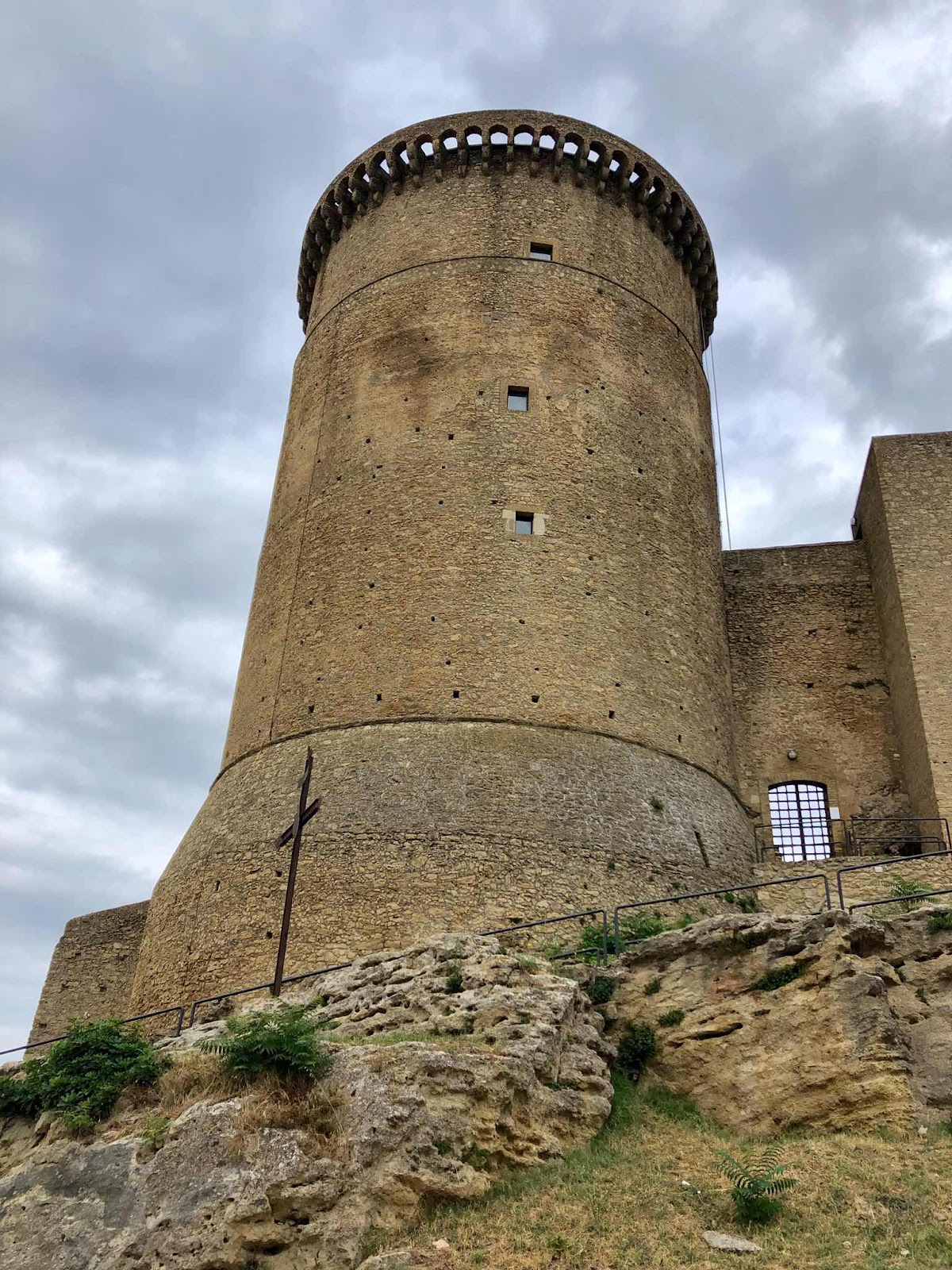
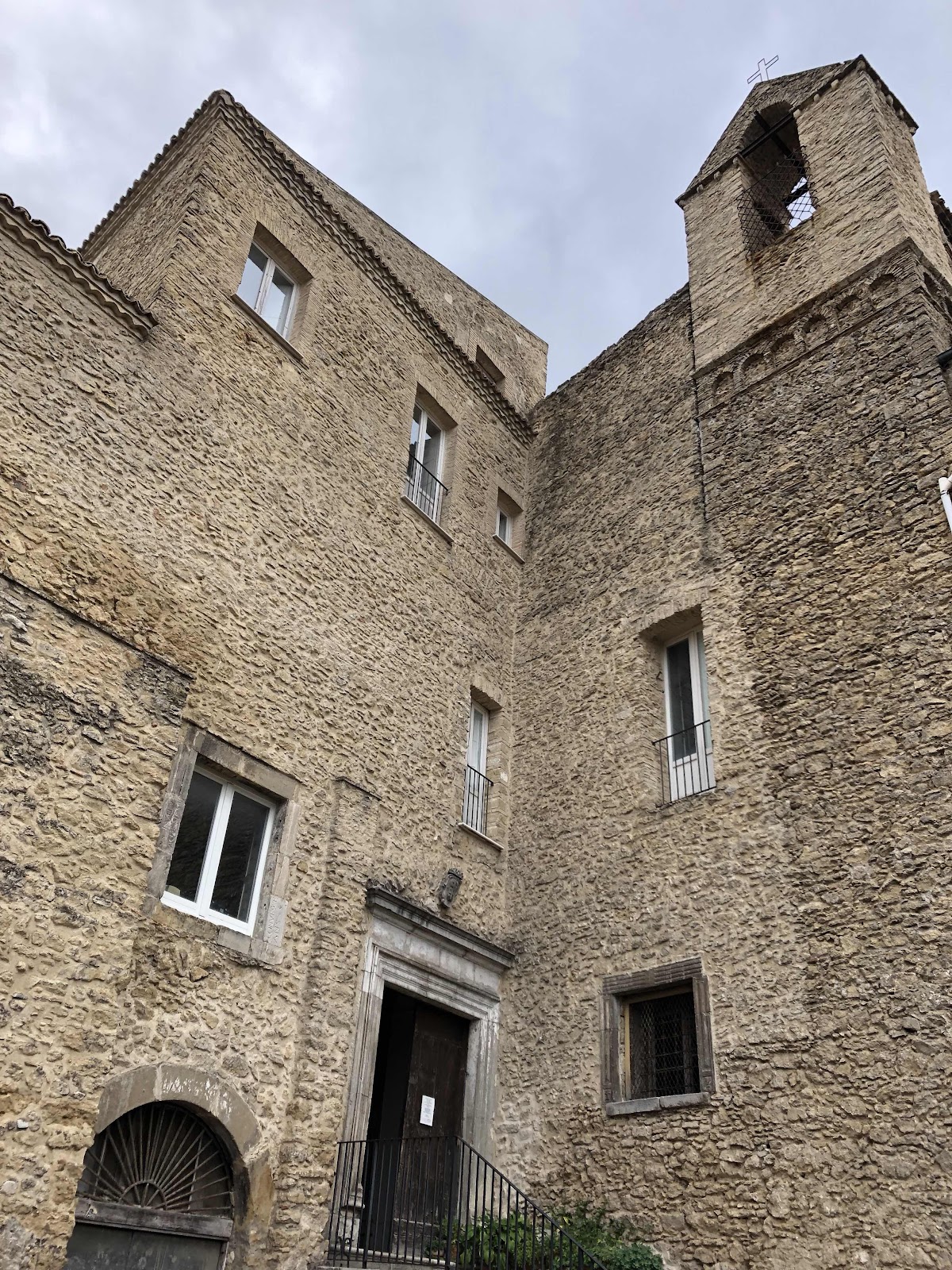
One our drive to Matera, our guide book suggested a min9r detour to a hilltop town, Tricarico. And what you find there is a Norman Tower/Castello. And  the Chiesa di Santa Chiara. The church was locked, but a local parishioner had a key and let us in. There are some amazing frescos from 1611. A short stroll down from the top of the hill led us to a bar (caffé), where, with a pick-me-up caffé, we were then on our way to Matera.

11th century Norman Tower/Castello, Tricarico

Santa Chiara, Gothic, 1333

Adoration of the Magii by Pietro Antiponio Ferro, 1611,  Santa Chiara, Tricarico


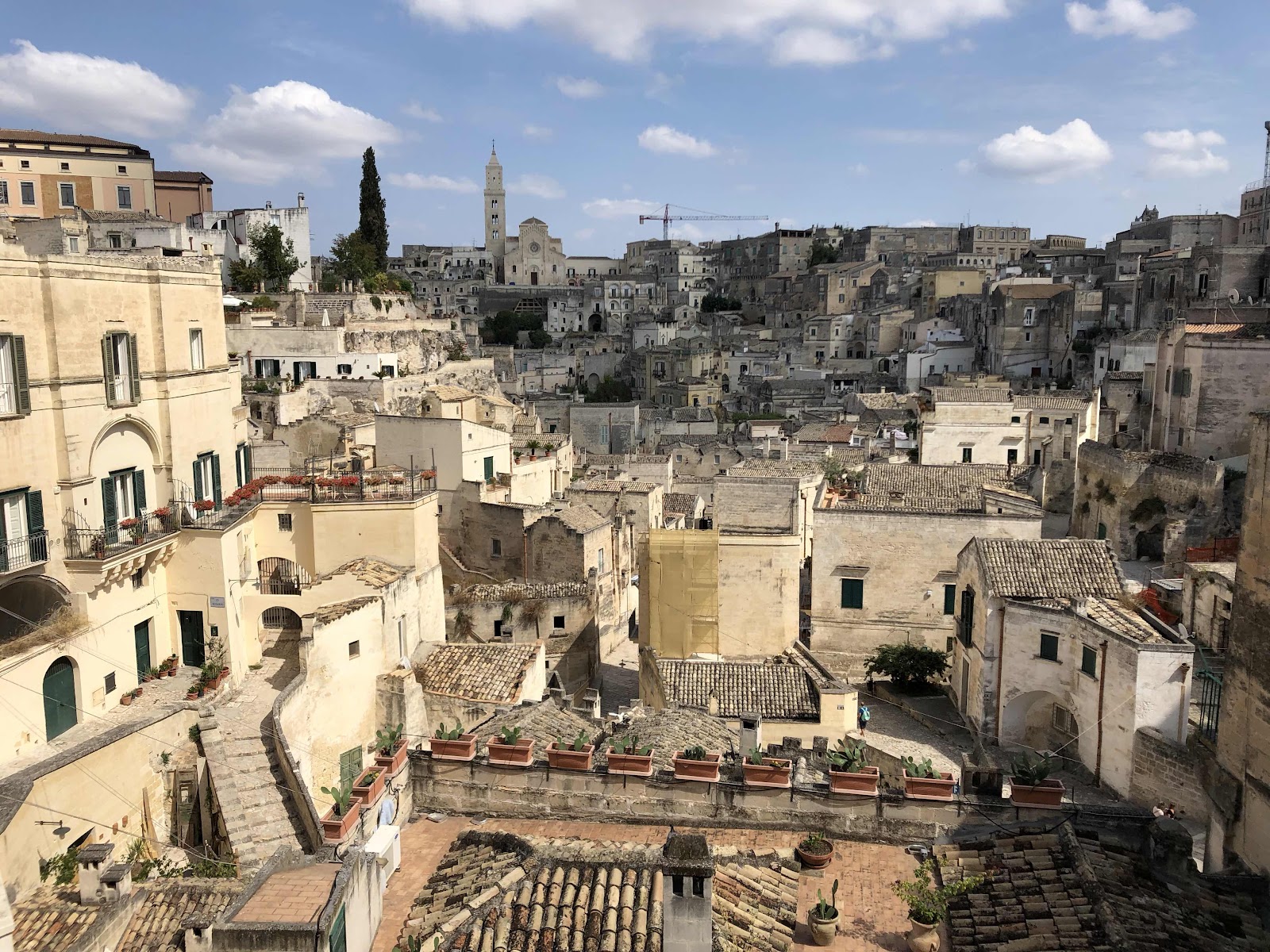
A first impression of Matera, UNESCO World Heritage Site


Saturday, August 31, 2019

Craco has seen better days

Craco, in Basilicata, has seen better days. In the 11th century, a Norman fortress was built, and in the 1200s there was a university, and later several Palazzos were built. Then there was a plague in 1656 which killed hundreds, and later the town was under Napoleonic rule. And between 1892-1922, more than 1,000 townspeople migrated to North America due to declining agriculture. Then there were landslides in the 1960s, some from natural causes, and some from poorly planned infrastructure projects. An earthquake also contributed to Craco’s downfall.

The end result: Craco is a crumbling ghost town, now known as the backdrop to movies such as Christ Stopped at Eboli, King David, and The Nymph. The only way to see Craco close-up is with a tour; hard hats required. The tour is on foot, and only goes on the exterior, winding, narrow streets since the buildings are too precarious to go inside. 

Here are a few photos that include the Norman Tower and the Cathedral.
Craco, in Basilicata

The Cathedral of Craco

11th century Norman Tower

Craco is surrounded by wheat fields and olive groves


Friday, August 30, 2019

a squared plus b squared equals c squared

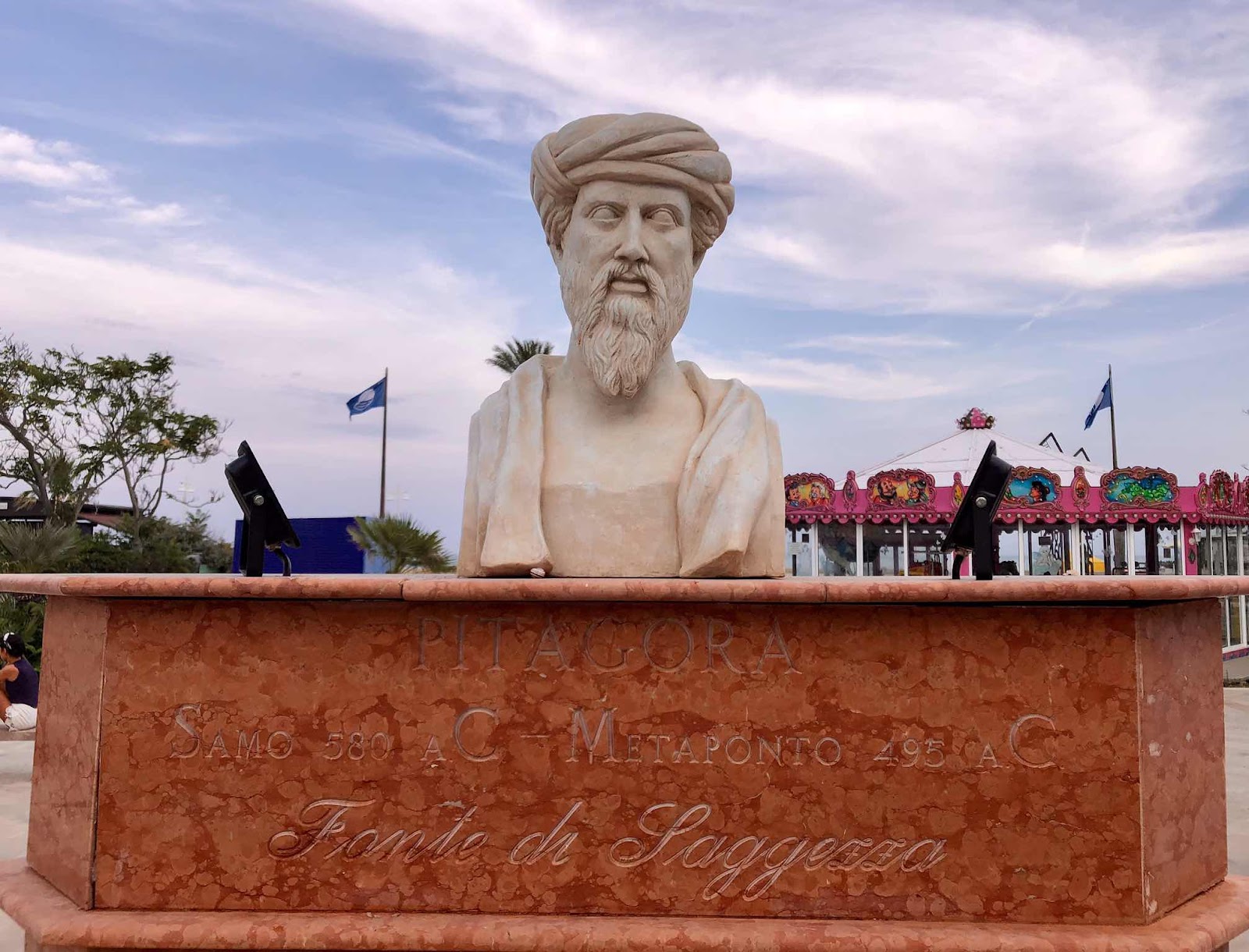
Who among us does not remember this equation from high school geometry? And we also remember that the “c” is the hypotenuse of a right triangle. We have Pythagoras to thank for this formulation, or in Italian, Pitagora. Yesterday was our first day in Basilicata, the region to the west of Puglia. We are in a town on the coast called Metaponto where Pitagora lived the last 15 of his 85 years (580 - 495 BCE).

Pitagora on the main square, Piazza Pitagora


We’ll tour a Greek archeological site today, as well as an archeological Museum here in Metaponto. Yesterday we stopped at the Tavola Palatina to see the ruins of a Greek Temple dedicated to Hera, sister/wife of Zeus and Goddess of Women. Unfortunately, only 15 of the original 32 Doric columns remain, and there is no frieze or tympanum.
 Tavola Palantine, Metaponto, Basilicata


Wednesday, August 28, 2019

Arbor belli...tree of war

After a closer look at the origins of the name of Alberobello, the small town in Puglia, I discovered that the name is derived from arbor belli...tree of war. Seems as if the area, an oak tree forest, was contested between two feudal kingdoms in the 11th century,  and the contested are became known as arbor belli. Alberobello means beautiful tree in Italian, so I’ll go with that.

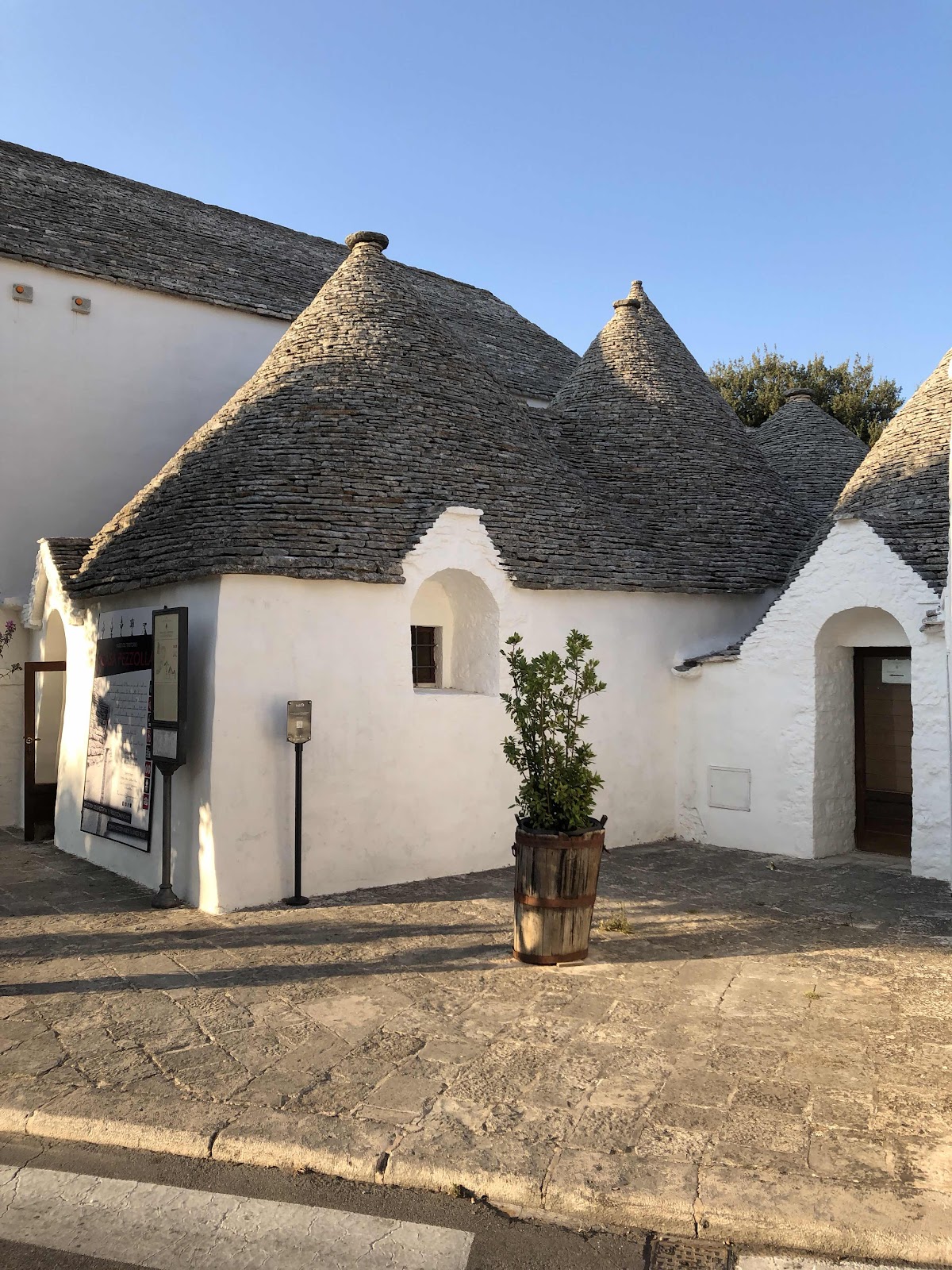
Alberobello is a UNESCO World Heritage site because of its uniquely shaped and constructed houses, the trulli (trullo in the singular). The count who owned the land allowed people to build only temporary houses; building permanent  houses would have required the count to pay taxes to the Spanish rulers in the Kingdom of Naples. The local folks developed a round design for the houses that would be be stable without using mortar. 

Many of the trulli in Alberobello are centuries old, but the walls are strengthened with mortar, and the exterior and interior walls and ceilings are finished with plaster. The roofs still appear to be dry layed without mortar. Our trullo has modern plumbing, electricity, and AC (thankfully since it's been around 90 degrees F). Here’s a photo of our trullo, Trulli delle Sorelle #14.


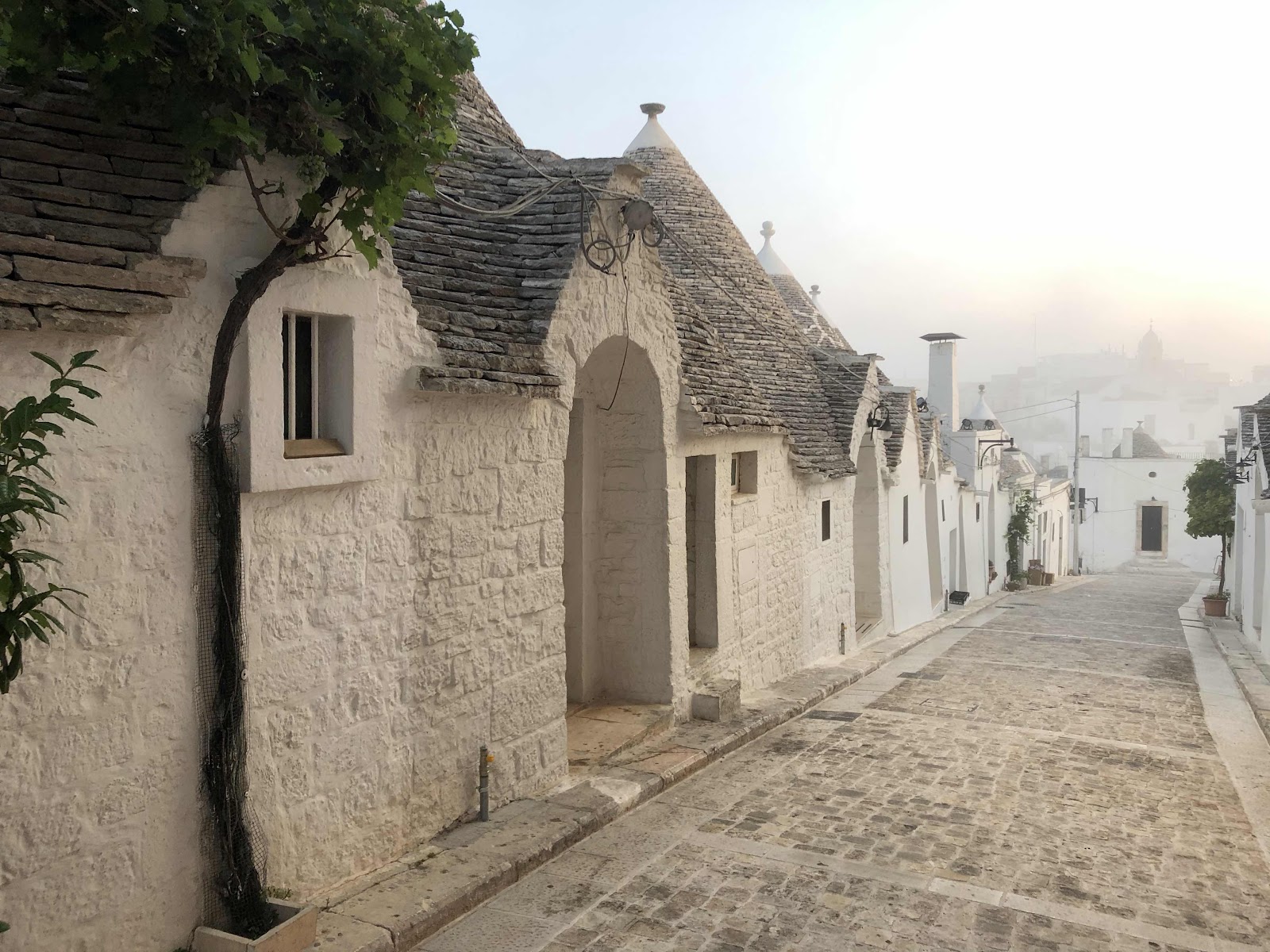
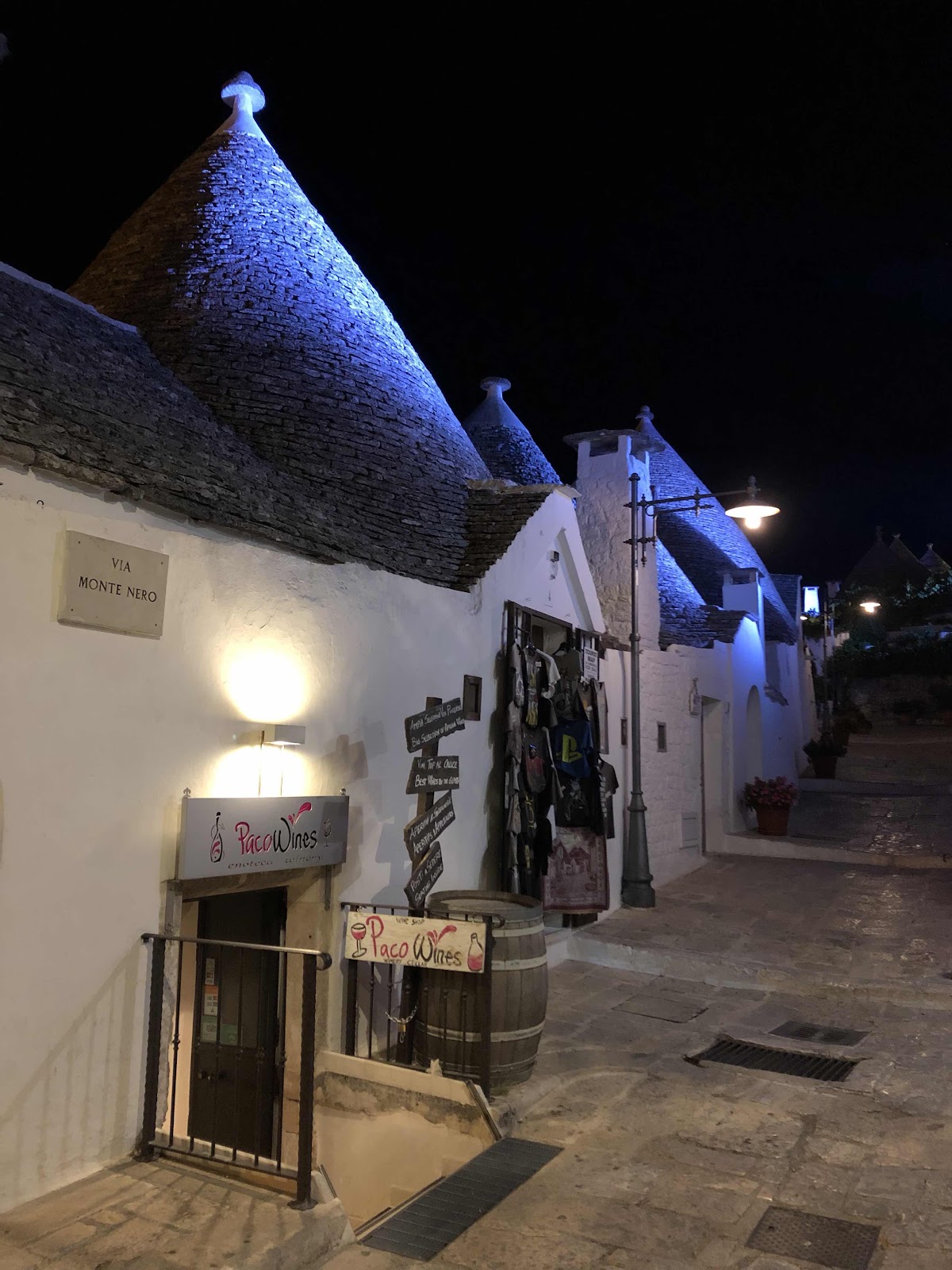
There are trulli in most parts of the old city, with one area, the Rione AIA Piccola that has the most authentic trulli. That are is just around the corner from our trullo. When we arrived yesterday afternoon, the streets were full of tourists, and it was difficult to get photos of the trulli without people. So I got up at 5:30 this morning to photograph, and the streets were completely empty except for the guys sweeping the narrow streets. Here are a few of the photos from today in Alberobello.

R


We had a “tasting antipasto lunch” today, which consisted of several salamis, cheeses, bruschetta, etc., and we thought we would have about five or six types of antipasti. But the waiter kept bringing plate after plate of antipasti, and by the end, there were 20 different samplings of antipasti. Thankfully, our dinner reservations are for 9:00 pm tonight (and that’s considered early in Puglia). Here’s the list of antipasti that we endured this afternoon: 

Bruschetta 
Buratta cheese
Taralli 
Focaccia
Pane
Olives
Cima di rape
Peperoncino e tonno
Pomodoro secco 
Carciofi
Zucchini 
Melanzane 
Prosciutto 
Capocollo 
Salami
Pecorino cheese
Stracchino cheese
Figs
Caciocavallo cheese
Mortadella

Ciao,
David

Monday, August 26, 2019

Taranto....a Spartan colony

Taranto was founded by the Spartans in the 8th century BCE and it is the only colony ever founded on the Italian coast by Sparta. It was among the most important in Magna Grecia, and it became a cultural, economic and military power. The name of the city is derived from the tarantula spider; fortunately, we haven’t seen any so far. There are also supposed to be lots of dolphins in the surrounding Ionian Sea: unfortunately, we haven’t seen any dolphins, except in Greek and Roman sculptures. 
We made a late afternoon tour of the oldest part of Taranto on Sunday...the original Spartan settlement. The only remaining evidence of Greek architecture is two Doric columns from a Greek Temple, the Temple of Poseidon. I normally like to wander around narrow streets in the vecchia città, but the old part of Taranto, dating from the 11th century to the 17th/18th centuries, is largely unpopulated, with at least a third of the buildings in ruins, and some only standing because steel girders are reinforcing them. There are some newer, Mussolini era apartment blocks from the 1930s, and by now, most of them are showing their age. Since the city went bankrupt around 2005, it’s not clear where the money would come from to save this città vecchia. Moreover, with nearby oil refineries and a steel plant that produces 90 percent of Italy’s dioxins, it is not a healthy  place to live. 
So why are we here? Taranto, in 500 BCE was one of the largest cities in the world, with a population of around 300,000. Who knew? The National Archeological Museum’s Collection is among the best in the country, drawing on Taranto’s rich history. Taranto had a major pottery industry during the Greek episode, and issued its own coins. And around 272 BCE, Taranto became a Roman City (only after it had taken the wrong side with Hannibal during the Phoenician/Roman wars for domination of the peninsula). And the Aragonese Castello is another draw to the city. And Taranto is perhaps the second most important naval base in Italia today (in fact, the Italian Navy occupies the Castello St. Angelo.
The more modern/historic part of the city, where our B&B is located, dates from around the 1850s to 1900. It’s where there was a Roman settlement, so the streets are in a grid pattern, with some wide avenues, and the Main Street had several blocks of a pedestrian zone. Reminicient of Torino.
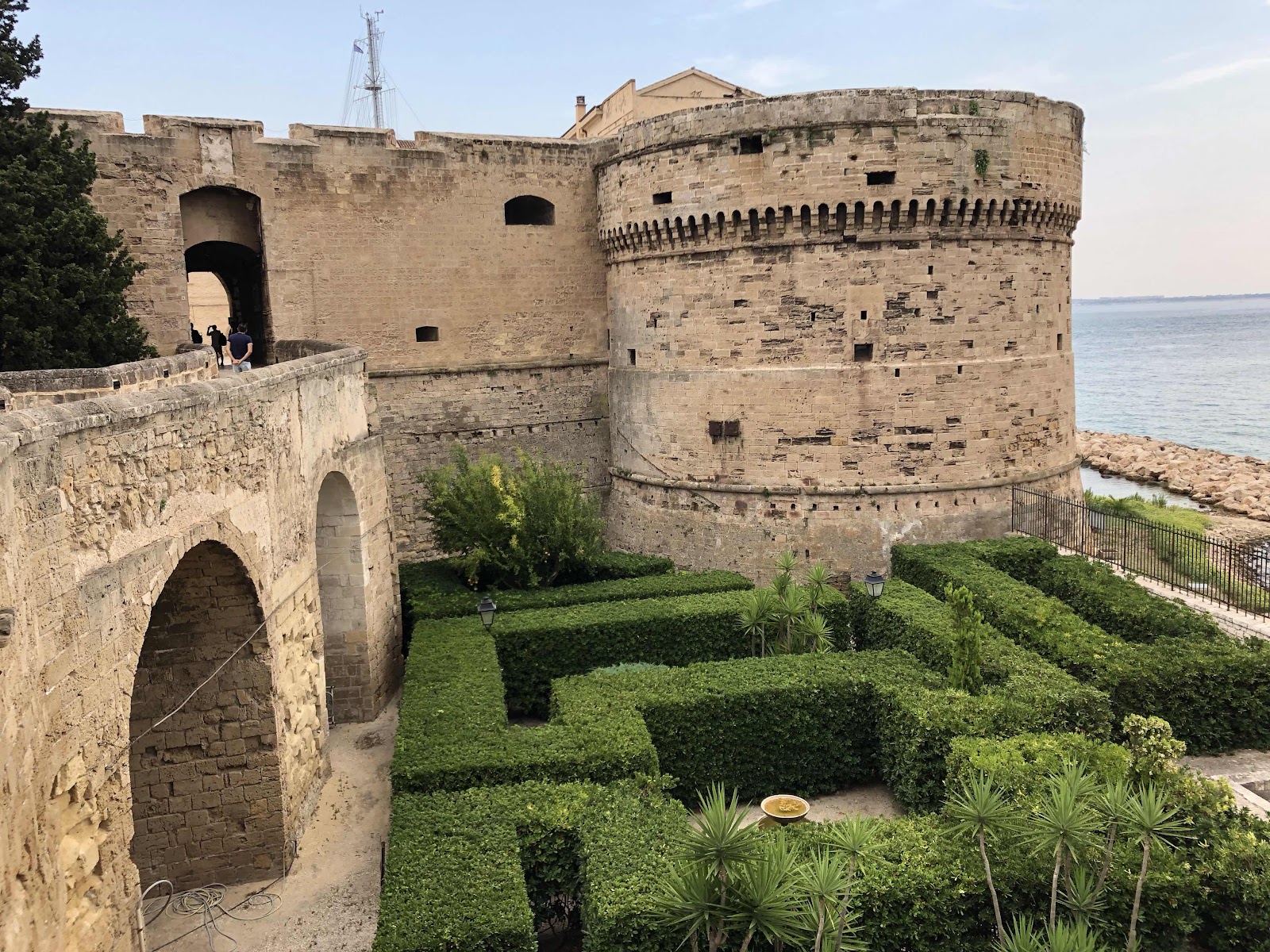
Castello St. Angelo, 1492. Castle walls are 25 feet thick to withstand 15th century Saracen naval artillery



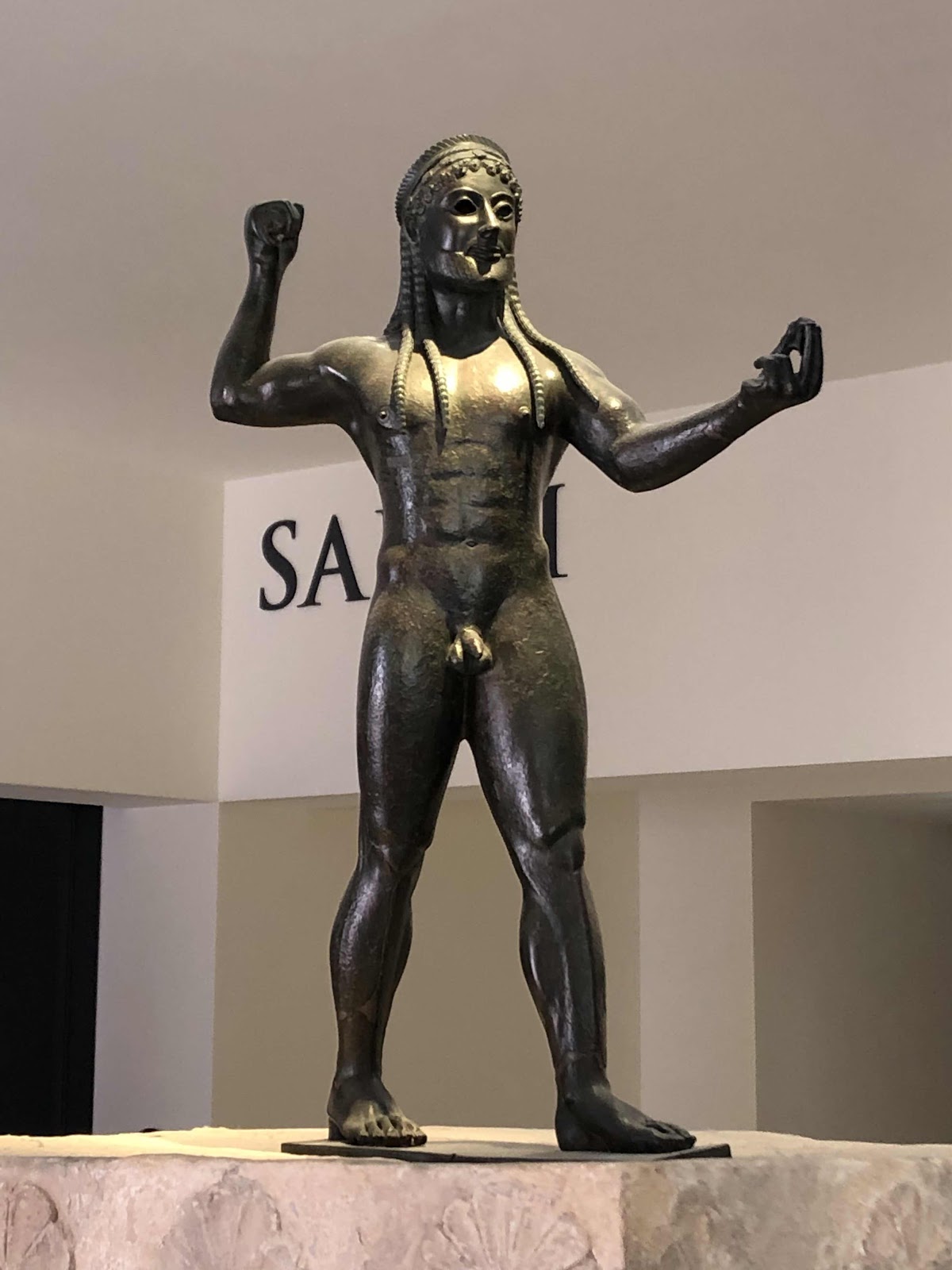
Zeus, from Greek settlement of Taranto, 5th - 6th century BCE

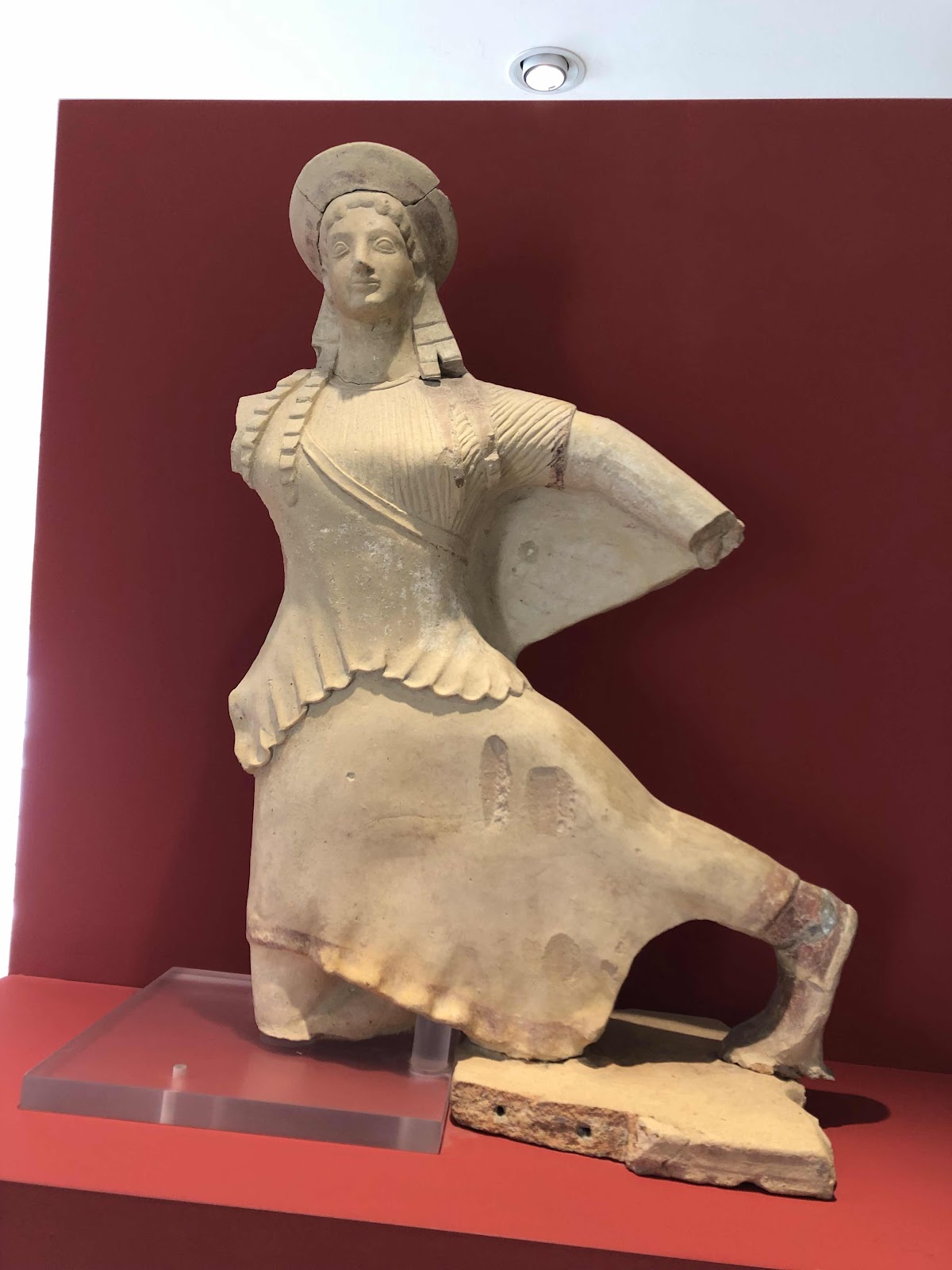
Greek sculpture, architectural detail, 5th century BCE

Greco Roman Battle scene sculpture, 3rd century BCE


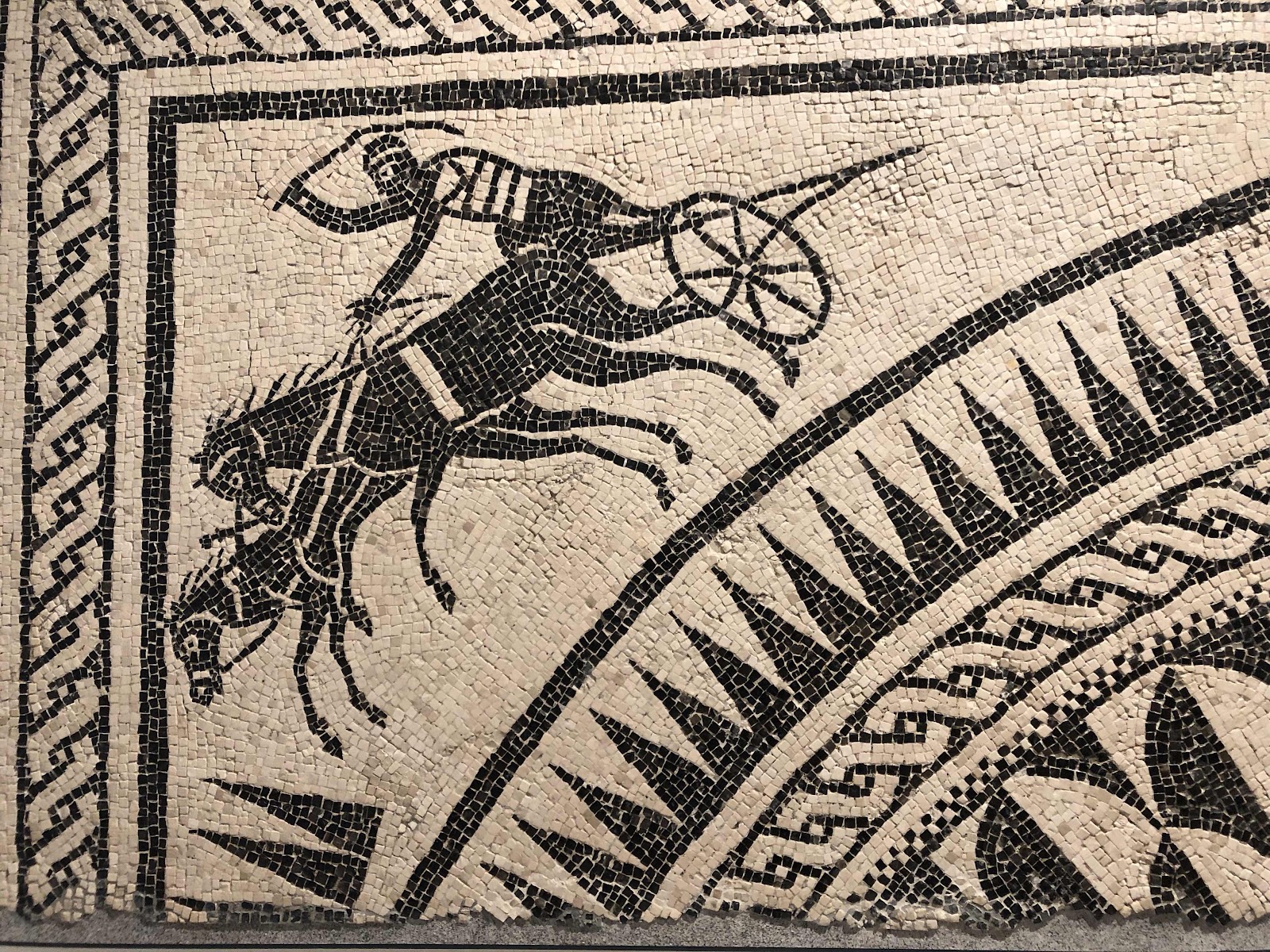
Roman floor mosaics, 1st / 2nd century BCE


The “modern” Taranto, 18th /19th century Taranto, Piazza Maria Immaculata

Ciao,
David